
Relational Dynamics, Insight in Relationships
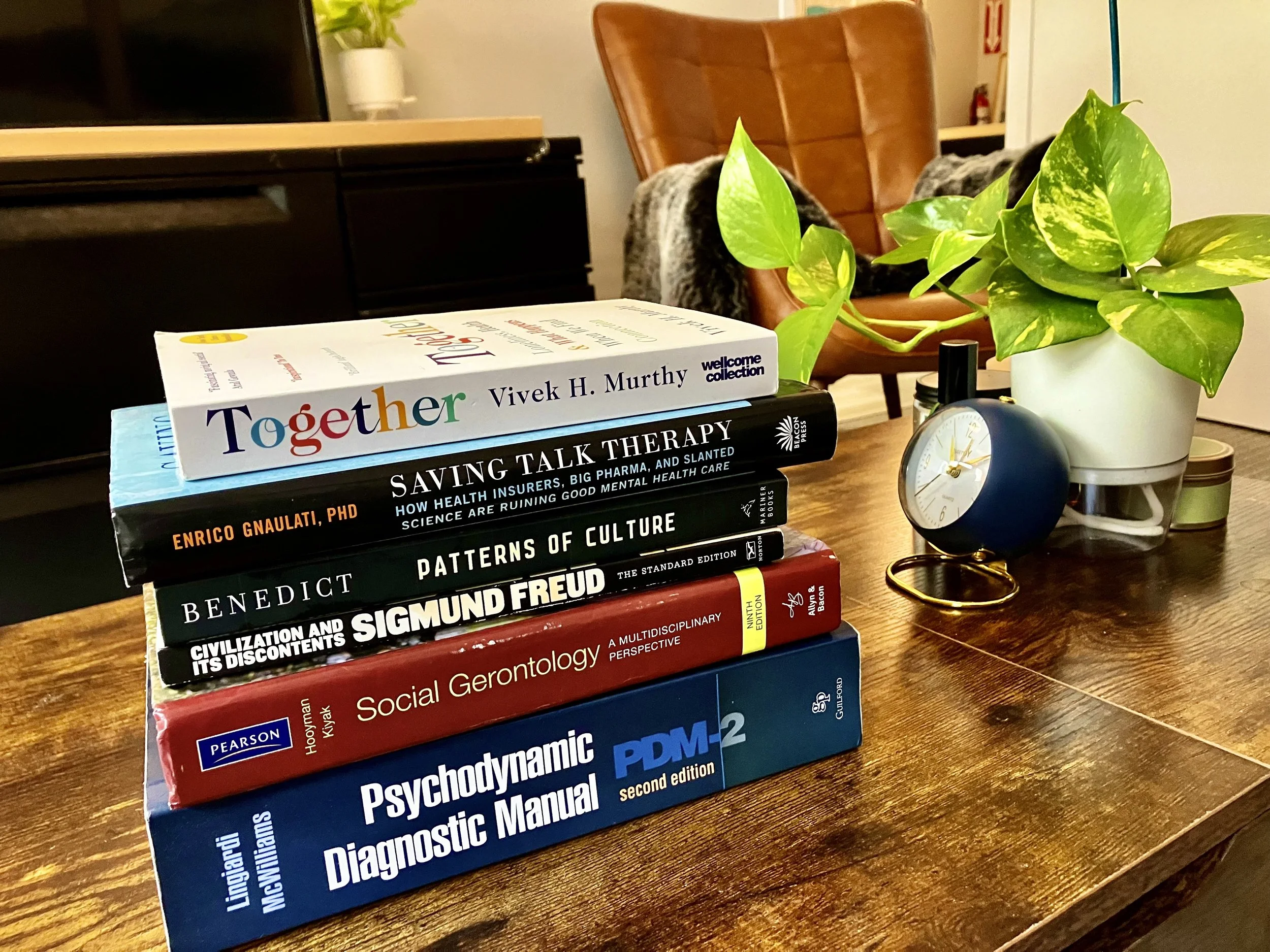
Insight- Oriented Psychotherapy
Many people come to therapy having already tried cognitive and behavioral "tools." While managing symptoms is vital, these approaches often act as a bandage on a deeper wound. Insight-Oriented (psychodynamic) psychotherapy is the pivot from merely managing behavior to understanding the deeper dynamics of your mind and psyche.
"The psychological rule says that when an inner situation is not made conscious, it happens outside, as fate."
— C.G. Jung, Aion

You might notice these patterns appearing in your life as:
The "Same" Relationship: Finding yourself dating the same person with a different face, or feeling stuck in a loop of abandonment or conflict that you can’t seem to break.
The Inner Critic: A persistent sense of "not being enough" or a fear of failure that sabotages your ambitions, even when you have the skills to succeed.
Invisible Walls: Feeling "stuck" or "frozen" in your career or creative life, despite knowing exactly what steps you need to take.
Unexplained Anxiety or Depression: A heavy weight or a sense of dread that persists even when your external life seems "fine."
Discover Insight Within
Psychodynamic Psychotherapy
In this practice, we view your life as a tapestry of inner unconscious themes and relational patterns. Most of us come to therapy because of a "symptom"—something that feels like it is happening to us rather than by us. These symptoms are often the language of the unconscious, signaling that something deeper is out of alignment.
The Hidden Why: Insight & Psychodynamic Theory
In this practice, we use the "Talking Cure" to bridge the gap between what you know intellectually and how you feel emotionally. It isn't about reaching a final end-point; it’s about the valuable insights we unearth as we go. I like to think of insights as the treasures we find in your psyche along the journey, guided by the map of psychodynamic theory.
What is Insight: The Treasures
Unearthing the "Why": Discovering those "Aha!" moments where you finally see the hidden logic behind your current struggles.
Reclaiming the True Self: Following Donald Winnicott, we find the authentic, creative part of you that may have been buried under a "False Self" built for survival.
Naming the Gold: Identifying recurring themes in your life. Once we name a pattern, it loses its power to control you.
Connecting the Dots: The treasure of realizing how your past experiences are live-streaming into your present reactions and relationships.
Lasting Liberation: Each discovery brings a new level of freedom—moving from blind reaction to a state of conscious, empowered choice.
Feeling Different: Moving beyond just "knowing" a problem to actually feeling a shift in your own skin and your own worth.
The Map: Psychoanalytic Theory
The Traditions of Depth: A research-backed model of the mind rooted in the Psychoanalytic tradition—the "engine room" of the work.
The Unconscious & The Shadow: Following Psychoanalysis (Sigmund Freud) and Analytical Psychology (C.G. Jung), we explore the hidden thoughts and "ghosts" that run the show from behind the scenes.
Relational Blueprints: We pull from Attachment Theory (John Bowlby, Donald Winnicott) to see how early bonds created your internal "rules" for trust, love, and feeling “good enough.”
The Self & Mirroring: Using principles from Self Psychology (Heinz Kohut) and Object Relations (Melanie Klein), we look at how you see yourself and how to repair your internal foundation.
The Social Landscape: Following Adler’s Individual Psychology, we view you as a whole person shaped by your family, birth order, and social environment.
The "Here and Now": Using Interpersonal Psychoanalysis (Harry Stack Sullivan (Interpersonal) and Ego Psychology Applied to the Social Environment (Eda Goldstein), we view relationships as laboratories for change.
What to Expect from Psychodynamic Psychotherapy
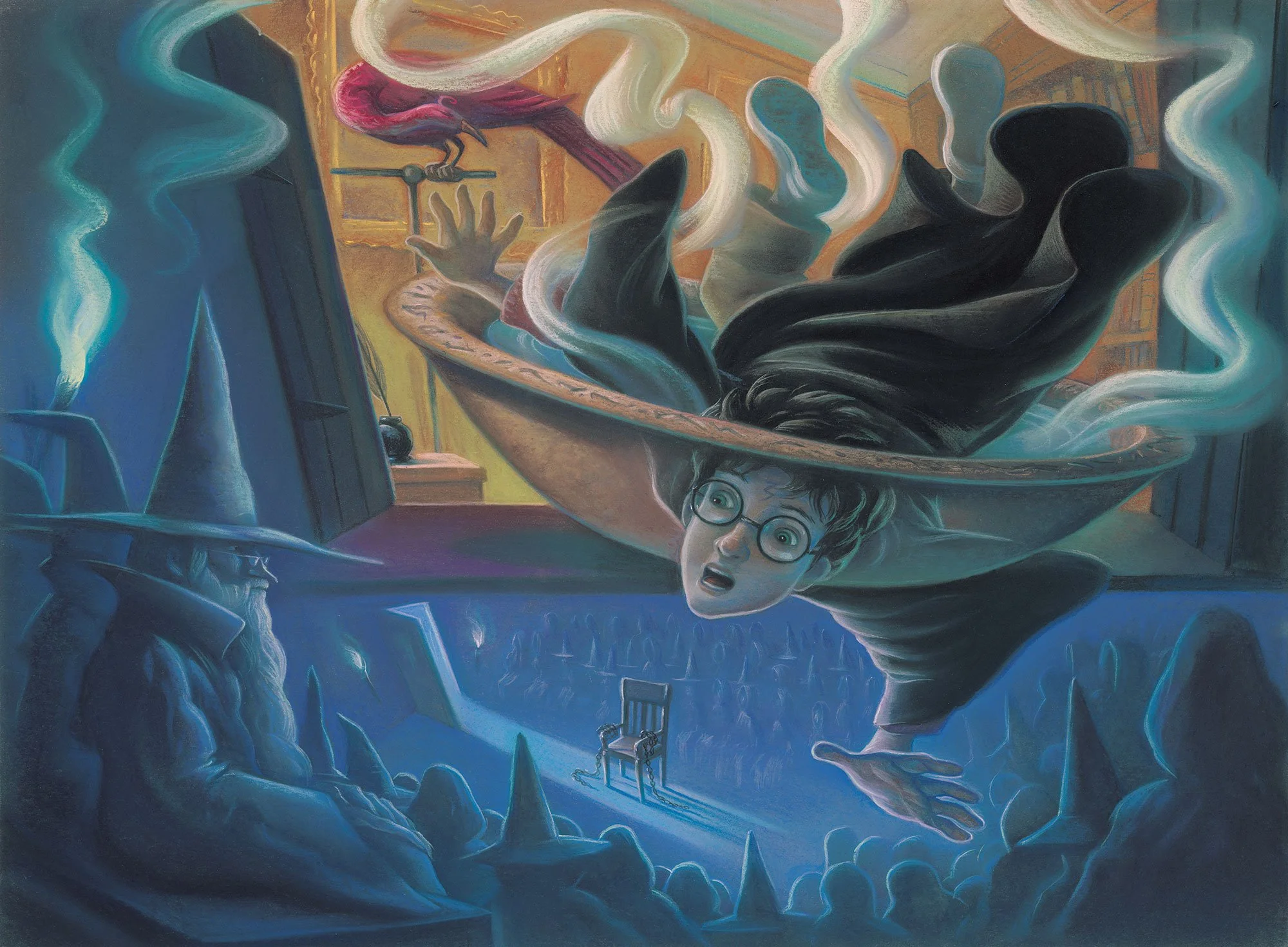
I often describe psychodynamic psychotherapy using the metaphor of the Pensieve from Harry Potter. This is a magical basin that allows you to literally step into a memory and witness it firsthand.
In our sessions, we become a team immersed in that basin. We don’t just talk about your past from a distance; we go back into the memories together, standing right there with the "characters" of your life. By revisiting these scenes as a team, we can finally see the details, feelings, and connections that were harder to recognize when you were living through them alone or at earlier stages of life.
Building "Mental Muscle": Unlike treatments that simply teach "coping skills" to manage symptoms, depth therapy builds a more sophisticated model of the mind. We expand your internal capacity to understand yourself, allowing you to navigate life's challenges with genuine freedom rather than just using a temporary "mental aspirin."
Neutralizing the "Ghosts": Research from the American Psychological Association shows that identifying recurring themes and patterns in your life—what Shedler calls "the ghosts in the room"—is the key to lasting change. Once we name these unconscious patterns, they stop directing your life as "fate" and become something you can consciously change.
A Momentum that Keeps Growing: The most unique part of this approach is that it sets a process in motion that doesn't stop when you leave the room. Because we are repairing the underlying engine of how you think and feel, your emotional strength and self-awareness actually continue to grow and deepen long after our work together is finished.
Starting Therapy is easy
01.
Get in touch by filling out this quick form here.
02.
We’ll schedule a time to chat and make sure we’re a great fit.
03.
Start therapy and begin your journey to healing!

Hi, I’m Benjamin Nguyen, LCSW, CPH
But you can call me Ben.
I am a triple UCLA-trained psychotherapist whose work is rooted in the long tradition of the "talking cure." My interest in the psychoanalytic tradition began over a decade ago with my membership in the American Association for Psychoanalysis in Clinical Social Work (AAPCSW) while completing graduate training at UCLA. I deepened my clinical specialization in psychodynamic psychotherapy at Airport Marina Counseling Service, and psychoanalytic training at the C.G. Jung Institute of Los Angeles. This allows me to offer a sophisticated, insight-oriented approach that looks beyond surface-level symptoms to explore the unconscious blueprints of the self, facilitating lasting and structural transformation.


Frequently asked questions about Psychodynamic Psychotherapy and Insight-Oriented Therapy
-
Think of Psychodynamic Psychotherapy as the modern, clinical application of Psychoanalysis. While both share a common lineage, they differ in intensity and structure. Classical Psychoanalysis typically involves meeting 3–5 times a week, often with the patient lying on a couch. An Analyst is a specific title for a clinician who has undergone years of additional, rigorous training at a psychoanalytic institute, including several years of their own personal analysis.
I am not a Psychoanalyst. I am a Psychodynamic Psychotherapist. My work is "analytically informed," meaning I use the same depth-oriented principles—exploring the unconscious and early life blueprints—but we work face-to-face, usually meeting once or twice weekly in a more relational, modern format.
-
When we talk about Psychoanalytic Theory, we are talking about the "map" of the human mind—the belief that unconscious processes, early attachments, and internal defenses shape who we are. When we talk about Psychodynamic Theory, we are talking about those same forces (the dynamics) in action.
The distinction essentially comes down to a professional "boundary":
The Shared Theory: Both theories agree that our "Implicit Self" (the Right Brain, as Schore emphasizes) holds emotional patterns that logic alone cannot reach. Whether you call it Psychoanalytic or Psychodynamic, the goal is Insight and Structural Change.
The Practical Nuance: Psychoanalysis is a specific, high-intensity format (3–5 sessions a week) practiced by an "Analyst" who has undergone their own extensive personal analysis. I am not an Analyst.
My Practice: I provide Psychodynamic Psychotherapy. This means I am "analytically informed"—I use Psychoanalytic Theory to understand the depth of your experience, but I apply it in a modern, Psychodynamic format (1–2 sessions a week).
-
Most modern therapies, like CBT (Cognitive Behavioral Therapy), are "top-down" and symptom-focused; they teach you tools to manage your thoughts in the present. Psychodynamic therapy is "depth-oriented." Instead of just giving you a toolkit to manage a fire, we go into the basement to understand how the fire started. Our goal is structural change—shifting the underlying personality so that symptoms naturally begin to dissolve because they are no longer "needed" as a defense.
-
We don't look at the past just for the sake of nostalgia; we look at it because it is currently "live" in your present. Your early experiences with caregivers created the emotional templates you use to navigate the world today. By making these "unconscious blueprints" conscious, we give you the power to choose new ways of being rather than simply repeating old patterns out of habit.
-
Not at all. While this approach is highly effective for trauma, it is also designed for high-functioning individuals who feel a sense of "stuckness," a lack of creative vitality, or a recurring pattern in relationships they can't quite break. It is for anyone who wants to live a more authentic, "integrated" life and is curious about the hidden depths of their own mind.