
Interpersonal Neurobiology & Affective Neuroscience
Science of Connection
Many have heard about attachment theory; this is a deeper expansion into the science of connection, attachment, and attunement.
We often think of the brain as something contained entirely within our heads. However, modern neuroscience shows that the brain is a social organ—it is physically shaped, wired, and regulated through our connections with others.
In this practice, we bridge the psychosocial with the biological. By combining Interpersonal Neurobiology (how relationships shape the brain) with Affective Neuroscience (the study of how the brain processes emotions), we create a space where your nervous system can lean into integration and healing. As we talk about life; we work with the primary emotional systems that drive your behavior and well-being.
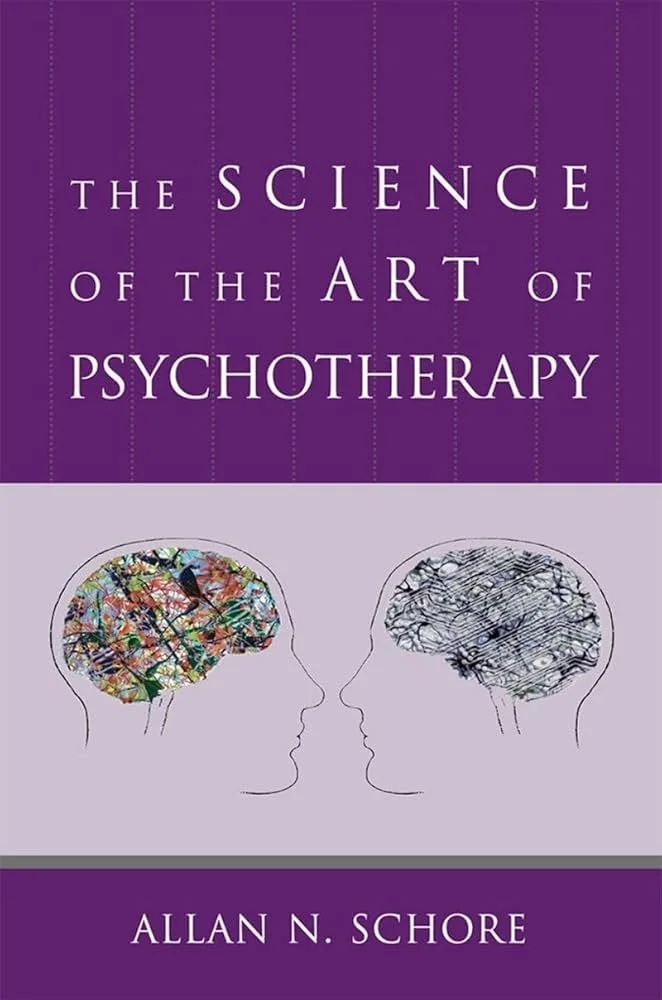
“Thus, at the most essential level, the intersubjective work of psychotherapy is not defined by what the therapist does for the patient, or says to the patient (left brain focus). Rather, the key mechanism is how to be with the patient, especially during affectively stressful moments (right brain focus).
— Allan Schore, The Science of the Art of Psychotherapy
Are You Looking for Deeper Integration?
Many people come to therapy because they feel a disconnect between what they know intellectually and how they feel biologically. You might recognize this in your own life as:
The "Logic Gap": You understand your patterns and "know" you shouldn't feel anxious or stuck, yet your body remains in a state of high alert or shut-down.
The Relational Echo: You find yourself repeating the same emotional reactions in your current relationships that you had in your earliest ones, as if your nervous system is "stuck" in an old chapter.
The Emotional Flood: Feeling easily overwhelmed by stress, where your "emotional thermostat" feels broken and you struggle to return to a state of calm.
The Numbness of the "False Self": A sense that you are performing your life rather than living it—feeling disconnected from your gut instincts, your creativity, and your authentic needs.
The Inner Critic: A persistent sense of "not being enough" or a fear of failure that sabotages your ambitions, even when you have the skills to succeed.
Science of Feeling “Seen”
Right Brain Psychotherapy
The left side of your brain handles the "facts" and the "story," but the right side handles the felt experience. Healing doesn't happen just by talking about your history; it happens through resonance. This is the non-verbal, energetic "handshake" between our nervous systems. When you feel truly seen and "gotten," your brain begins to regulate its stress levels in a way it cannot do alone.
The Science of Connection: A Unified Framework
In this practice, we view the mind through the lens of a unified series. We combine the "How" of our emotional wiring with the "What" of our mental health to provide a complete picture of your healing journey.
Affective Neuroscience and the Implicit Self
Pioneer: Allan Schore, PhD
Focus: The Right-Brain Connection. We focus on the non-verbal, emotional right hemisphere—the seat of your attachment history, your gut instincts, and your "unconscious" self.
The Mechanism: Resonance. Healing happens when my right brain synchronizes with yours. This energetic "handshake" allows us to regulate deep emotions that language cannot reach.
The Experience: "Feeling Felt." This is the biological experience of safety. It allows the right brain to let down its guard, moving you out of "defense mode" into a state of openness.
Interpersonal Neurobiology and Integrative Flow
Founder: Dan Siegel, MD
Focus: The Whole-System Mind. We look at how the brain, the mind, and our relationships work together to create a healthy, integrated life.
The Mechanism: Integration. Healing happens when we link different parts of the brain together—connecting your right-brain feelings to your left-brain logic.
The Experience: "Mindsight." This is the capacity to see your own mind and the minds of others with clarity, allowing you to respond to life rather than just reacting to it.
What to Expect from Right Brain Psychotherapy
In our sessions, we aren’t just talking; we are engaging in a real-time biological process. Here is how we bridge the right brain with the whole mind:
1. Building the Resonant Field
We begin by establishing Right-Brain Resonance. I pay close attention to the non-verbal—your tone, your breath, and the "vibe" between us.
The Experience: You feel truly "gotten" on a level deeper than words.
The Goal: To send a safety signal to your brain that allows it to shift out of survival mode and into a state where healing (being) is actually possible.
2. Navigating the Implicit Self
We then explore the unconscious blueprints stored in your right brain. These are the patterns that drive your reactions before your logic even kicks in.
The Experience: We don’t just recount the past; we notice how it shows up "live" in the room. We revisit memories as felt experiences to process unfinished emotions.
The Goal: To pull these patterns out of the shadows so they stop feeling like "fate" and start becoming choices.
3. Neural Integration & Expansion
Finally, we use Neural Integration to bridge the gap. We link your deep right-brain feelings with your clear left-brain logic.
The Experience: You start to find words for the "un-wordable." You’ll notice your Window of Tolerance widening—situations that used to "flood" or "numb" you now feel manageable.
The Goal: To build "mental muscle" and a sophisticated mind that remains flexible and resilient long after our sessions end.
Starting Therapy is easy
01.
Get in touch by filling out this quick form here.
02.
We’ll schedule a time to chat and make sure we’re a great fit.
03.
Start therapy and begin your journey to healing!

Hi, I’m Benjamin Nguyen, LCSW, CPH
But you can call me Ben.
I am a triple UCLA-trained psychotherapist whose clinical lens was forged at the Semel Institute for Neuroscience and Human Behavior, a global epicenter for the study of the mind and brain. Following my graduate training at UCLA, I spent five years (2018–2023) as a Clinical Specialist within the UCLA Department of Psychiatry and Biobehavioral Sciences. I shared this departmental home during the tenure of pioneers Allan Schore, PhD and Dan Siegel, MD as they developed their landmark work in Affective Neuroscience and Interpersonal Neurobiology.
My practice is an evolution of their scholarship and education conducted at the UCLA Center for Culture, Brain, and Development, which builds upon my foundational background in Psychological Anthropology with the science of attachment. I continue to refine this expertise through advanced training at Siegel’s Mindsight Institute. By bridging the rigorous data of a top-tier research university with psychoanalytic training from the C.G. Jung Institute of Los, Angeles, I offer a sophisticated, right-brain approach that evolves traditional "talk therapy" into a biological and soulful integration of the self.

Frequently asked questions about Right Brain Psychotherapy
-
No. While my work is deeply informed by Affective Neuroscience, I do not utilize MRI (Magnetic Resonance Imaging), EEG (Electroencephalogram), or other medical diagnostic tests. Instead, we use clinical observation and "Right-Brain-to-Right-Brain" resonance. I track non-verbal data—such as prosody (tone of voice), micro-expressions, and autonomic nervous system shifts. These biological signals provide a real-time, relational "map" of your internal world that a static scan cannot capture.
-
It is important to clarify that I do not utilize external devices or brain-monitoring hardware. Popular trends like TMS (Transcranial Magnetic Stimulation), tDCS (Transcranial Direct Current Stimulation), and Neurofeedback treat the brain like a machine that needs an external electrical "jumpstart" or digital feedback loop to change.
In contrast, Right-Brain Psychotherapy is a natural, relational intervention. We believe the most sophisticated "stimulant" for neural growth is attunement. Instead of using a computer to train your brain waves, we use the human connection to naturally regulate your nervous system and rewire neural pathways through a safe, shared experience.
-
EMDR (Eye Movement Desensitization and Reprocessing) is a specific technique that uses bilateral stimulation (like eye movements or tapping) to "unstick" traumatic memories. While EMDR is a valuable tool, Right-Brain Psychotherapy is a broader, depth-oriented framework. We aren't just processing isolated events; we are working with the Implicit Self—the underlying emotional "operating system" that governs your identity and how you relate to the world.
-
Brainspotting is a specialized tool that uses the visual field to find "spots" where trauma is held in the brain. While it is a powerful "bottom-up" approach, our work focuses on the intersubjective field—the psychological space between two people. In this model, the "spot" of focus is our resonance. We believe that Neural Integration—the linking of different brain regions—happens most effectively when your brain "leans" on an attuned, regulated partner to process deep emotions.
-
This is the "Logic Gap." The parts of the brain responsible for logic (the left hemisphere) are biologically distinct from the parts that manage deep emotion, survival, and attachment (the right hemisphere). You can intellectually understand your history and still feel stuck in the same physiological reactions. Right-Brain Psychotherapy bridges this gap, moving therapy from an intellectual exercise into a lived, biological transformation that language alone cannot achieve.